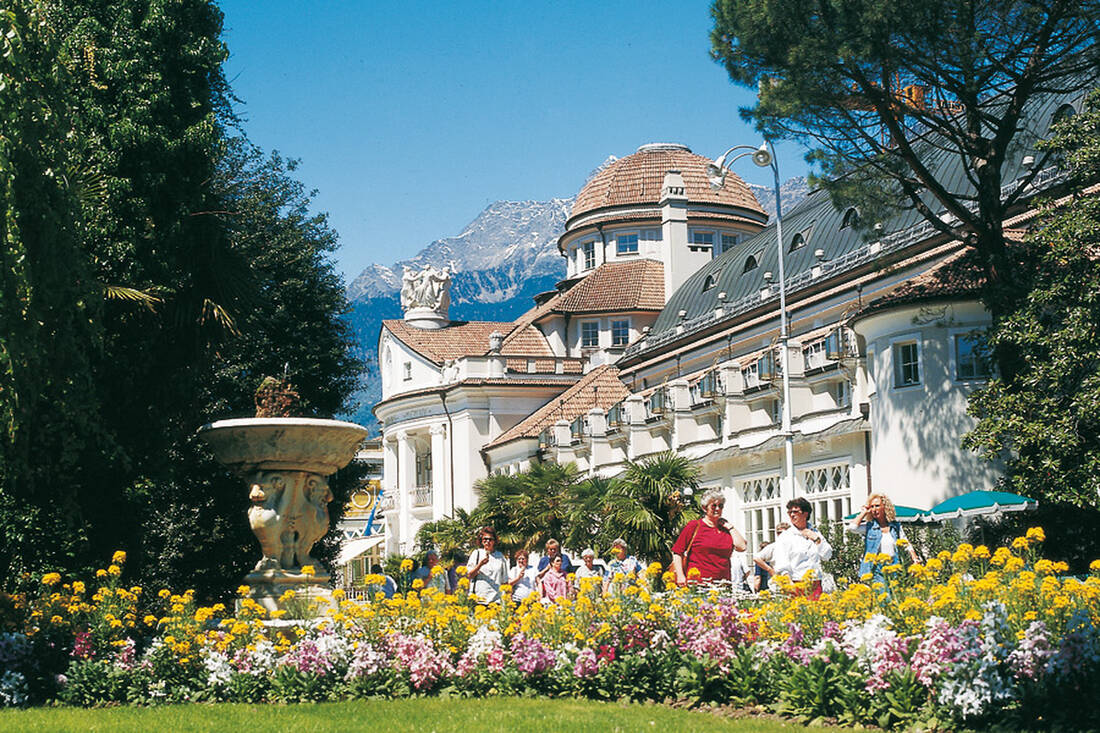
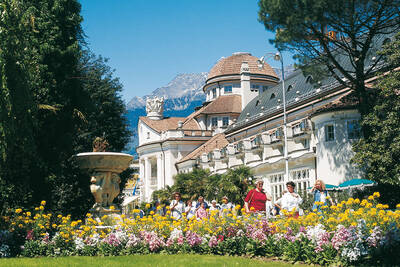
Kurhaus in Merano
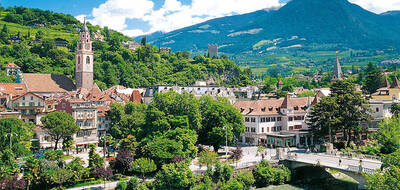
The development of the former capital of the County of Tyrol into a distinguished spa town began in the 19th century. The mild, Mediterranean climate and the radon-containing water of the thermal springs have a beneficial and healing effect in many ways, especially for lung diseases, Meran was considered an ideal spa resort.
As early as 1850, Merano was one of the first and leading tourist destinations of the Habsburg Monarchy, hosting numerous prominent guests. The fact that even Empress Sissi stayed here several times made Merano the first choice for nobles, politicians, and artists. Soon, the cityscape was dominated by the luxurious hotels and villas of the Belle Époque, and the famous promenades and spa park were created.
Only a venue for social events and gatherings was still missing, so plans were made to build a spa house according to the designs of architect Josef Czerny. In November 1874, this spa house, which corresponds to the current west wing of the complex, was ceremoniously opened. Around 1900, it was expanded with a terrace and former reading rooms, and the gas lighting was replaced by electric light. Next door, the city theater was built, which had its own ensemble until the First World War.
However, the constantly growing spa business required an even larger and more representative building. The renowned Viennese architect Friedrich Ohmann was commissioned to redesign and expand the complex in 1911. Ohmann, who had already designed the Palm House in the Vienna Burggarten, the development of the Vienna River in the Stadtpark, and the Hotel Central in Prague, designed the grand Kursaal and the rotunda, giving Merano perhaps the most beautiful Art Nouveau building in the Alpine region. The magnificent ceiling paintings in the Kursaal were created by Rudolf Jettmar, a founding member of the Vienna Secession, as well as by Alexander Rothaug and Horazio Gaigher. Ohmann's original plans even envisioned an even larger structure, but the outbreak of the First World War prevented any further work. The Merano spa house was ceremoniously opened on New Year's Eve 1914.
In the 1980s, the spa house was completely renovated, with the building and event technology brought up to date. It is now available for events of all kinds. The program ranges from concerts, balls, international congresses and conferences to culinary events. The Merano Music Weeks and the Merano Wine Festival are also held here. A total of 13 halls, equipped with the latest technology, can accommodate up to 1,000 people as needed. The highlight is still the grand Kursaal with over 700 m² and fantastic acoustics. The Merano spa house is also a member of the "Historic Conference Centers of Europe" (HCCE), an association of the most prestigious conference centers in Europe.
 How do you like the content of this page?
Please give us your feedback!
Recommended accommodations
Merano
★★★★
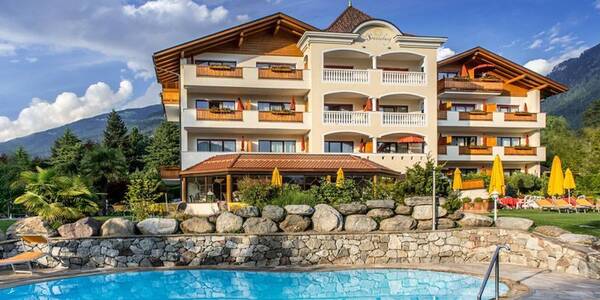
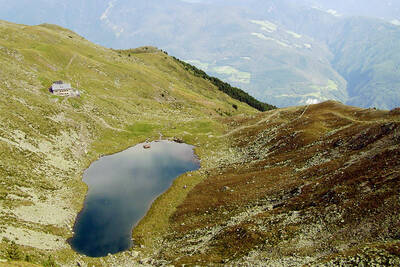
Our Hotel in Merano, the Hotel Sonnenburg, is a stylish and peaceful oasis nestled in the chic residential area of Maia Alta/Obermais. Located in Merano and Environs and surrounded by breath-taking mountains, this gorgeous backdrop is the perfect place to relax and enjoy an eventful holiday in Merano.
Merano
★★★
For three generations we have personally and lovingly dedicated all our efforts towards ensuring the well-being of our guests so that their vacations can be truly splendid and unforgettable.
Merano
★★★★★
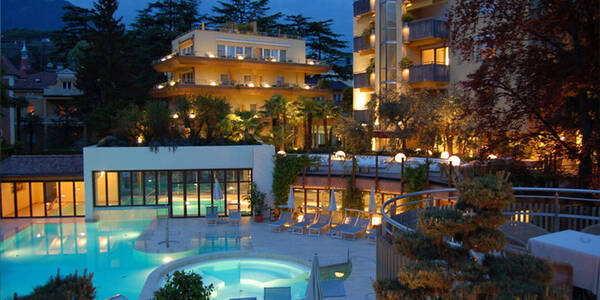
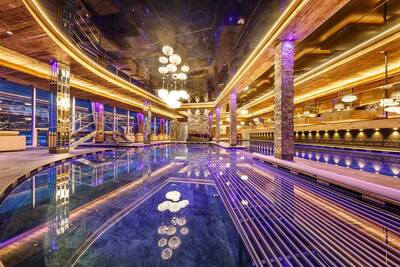
Welcome in the Belvita Park Hotel Mignon & SPA Merano! Come in and have a insight in the beauty of Merano and surroundings!
Merano
★★★★
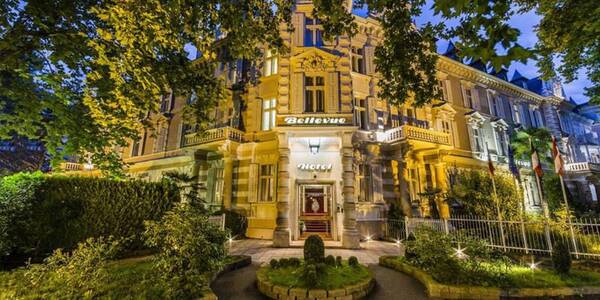
Welcome to the Grand Hotel Bellevue in the centre of Merano, South Tyrol. What a pleasure to see you on our website! Maybe we can welcome you personally very soon at our hotel. It would be great! Experience and write yourself a piece of Merano‘s history at the Bellevue.








 notice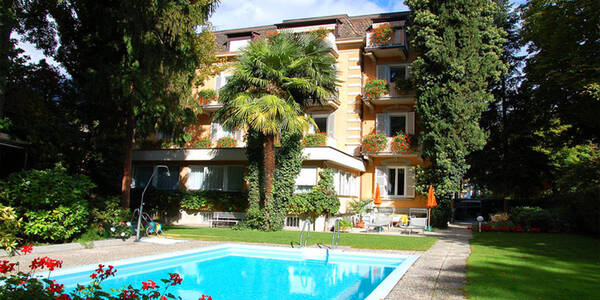








 More infos…